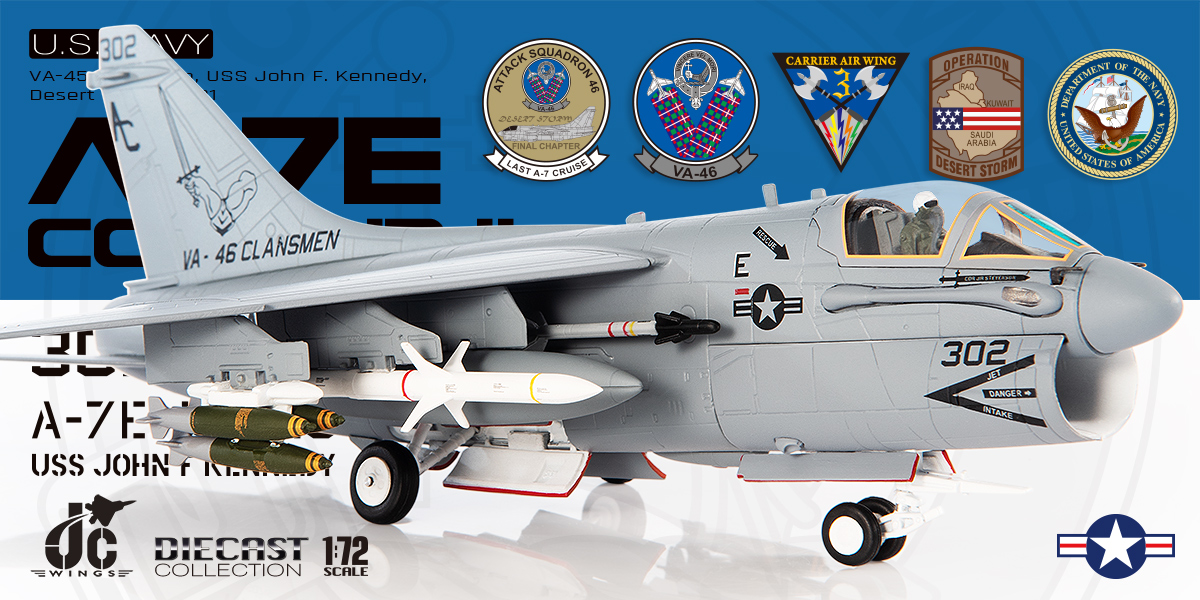
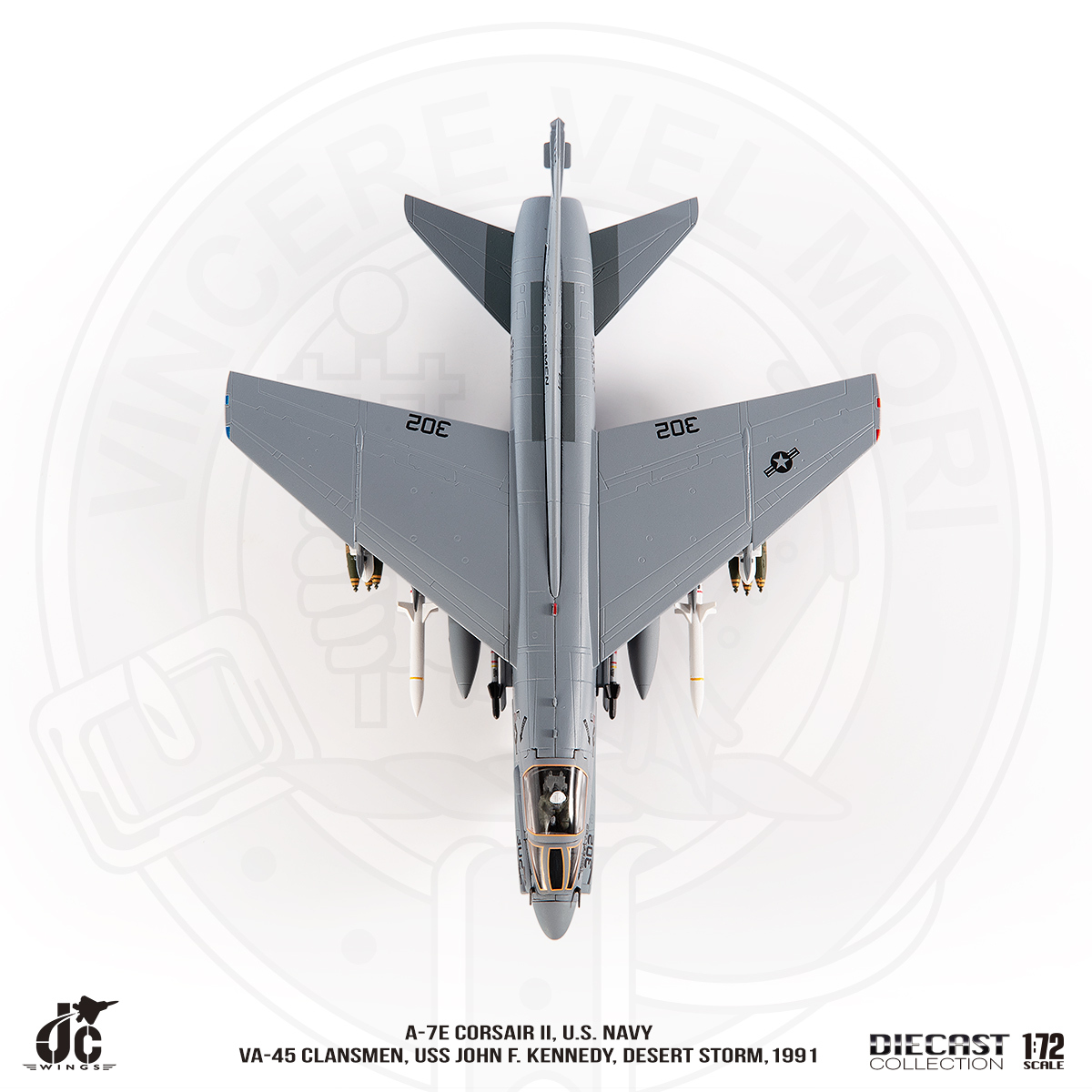
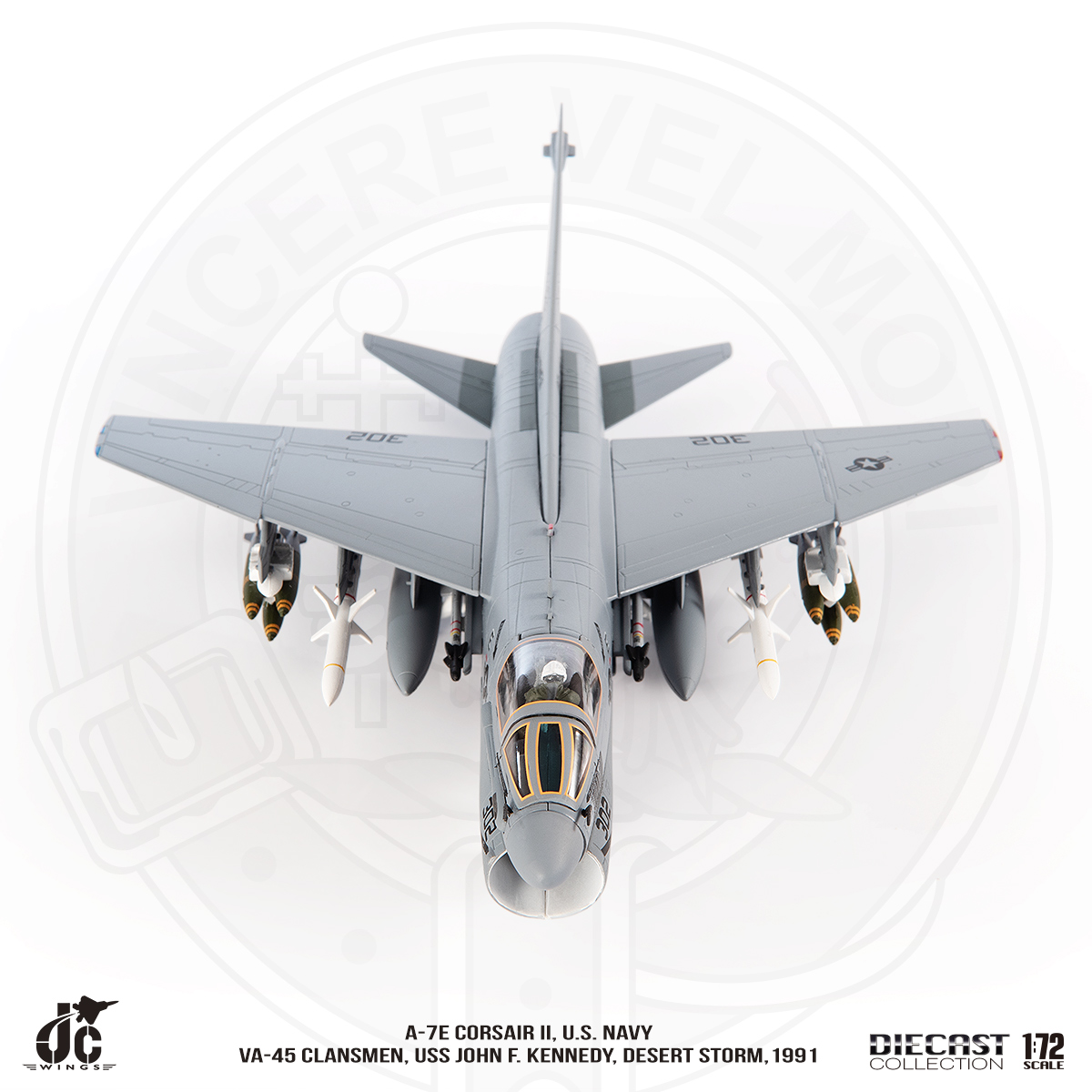
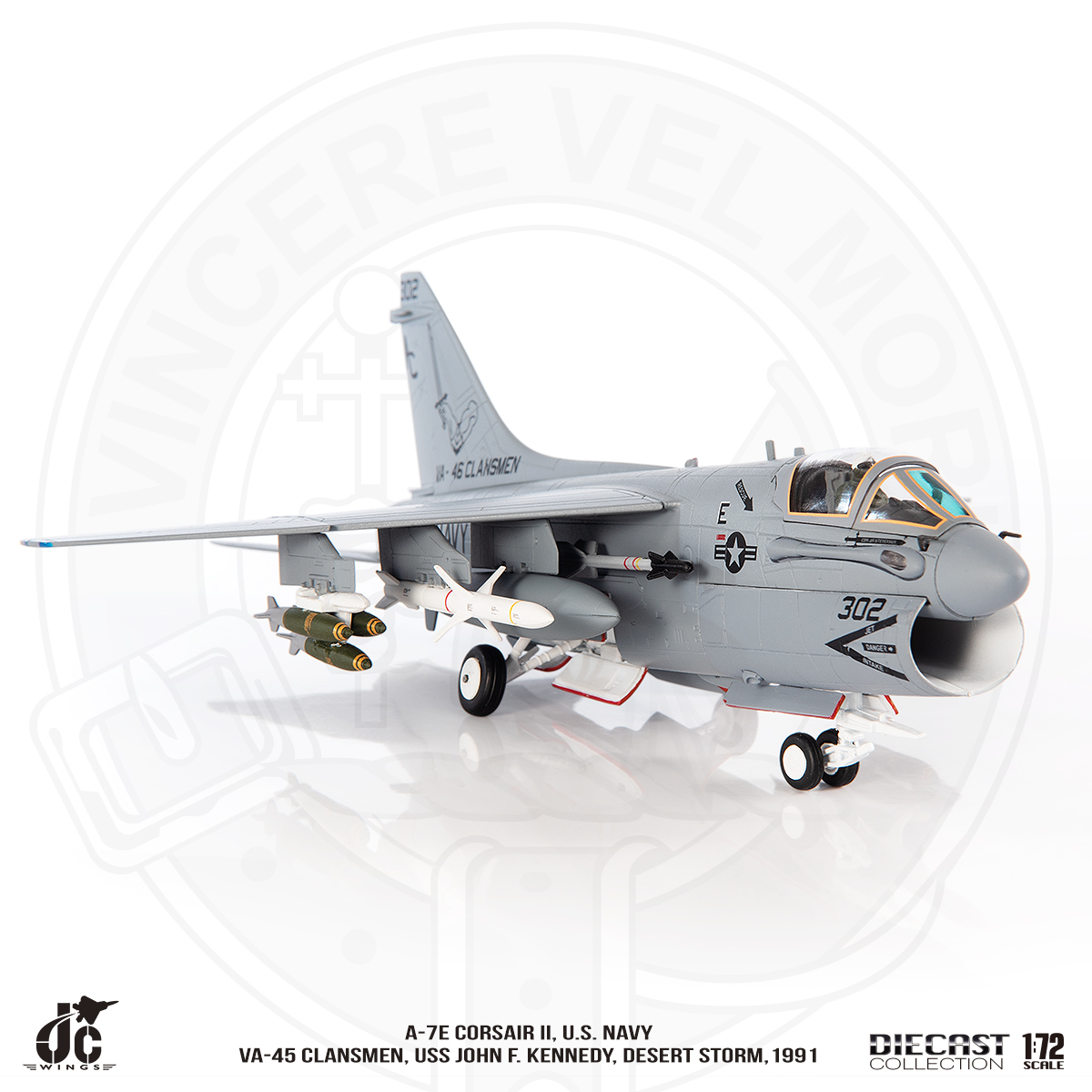
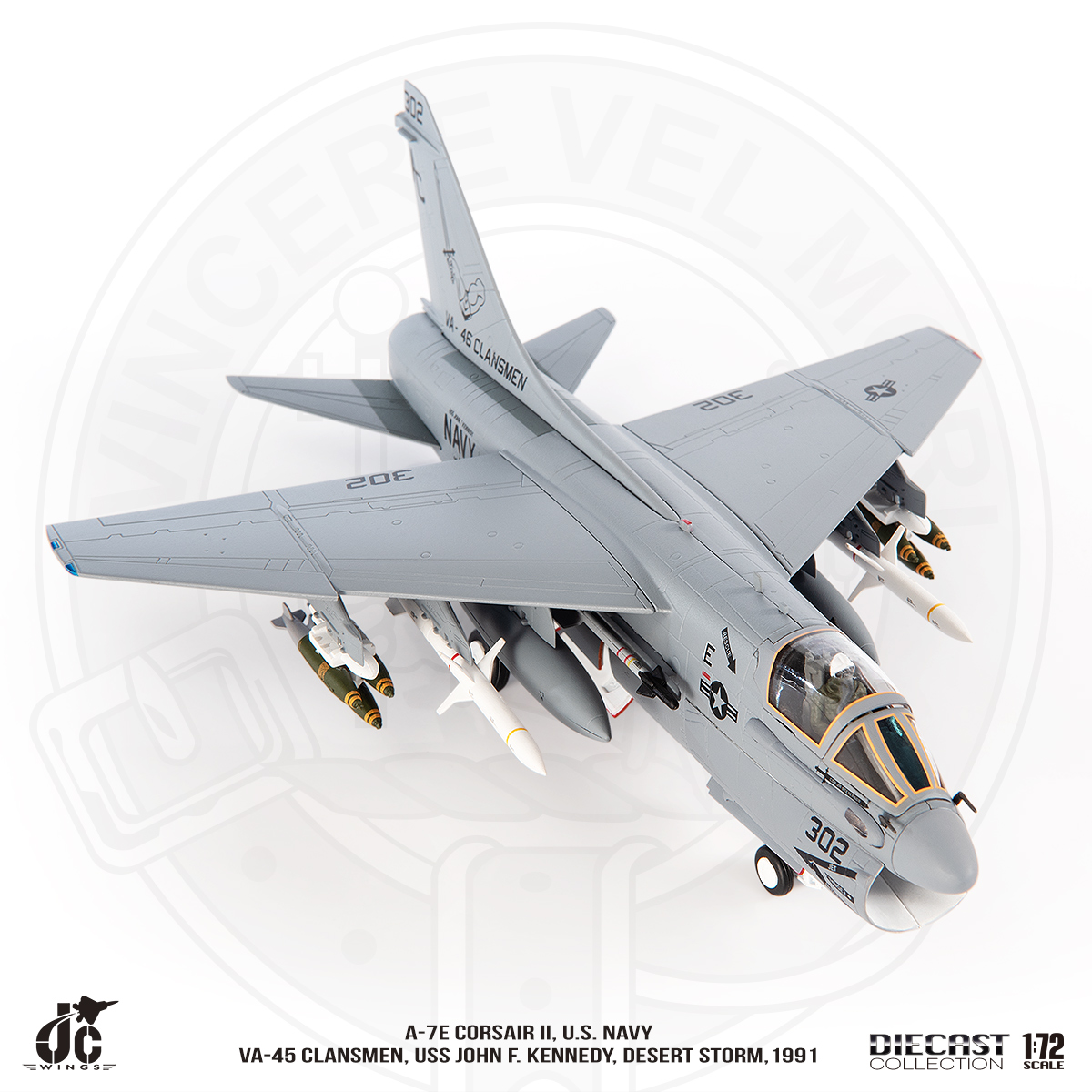
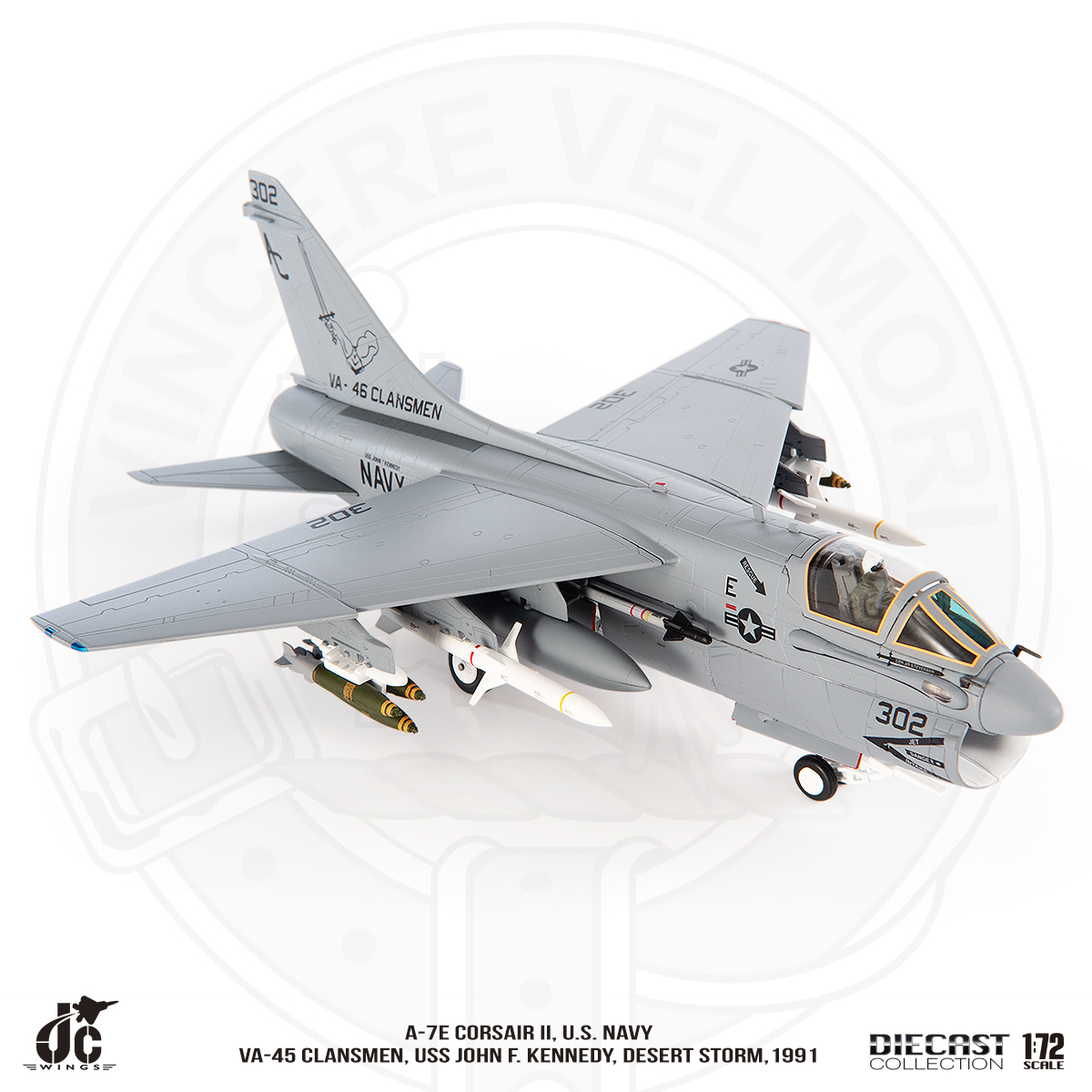
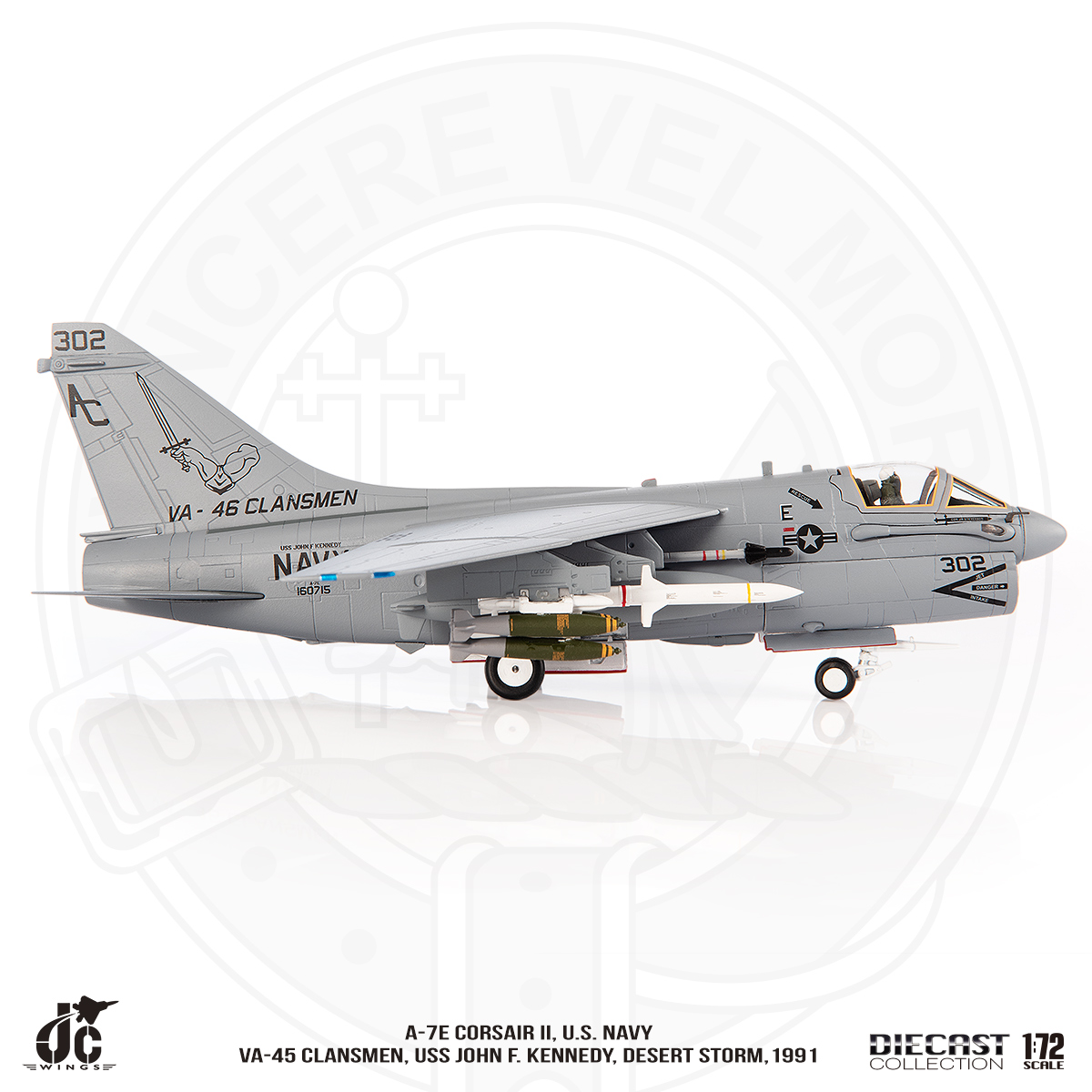
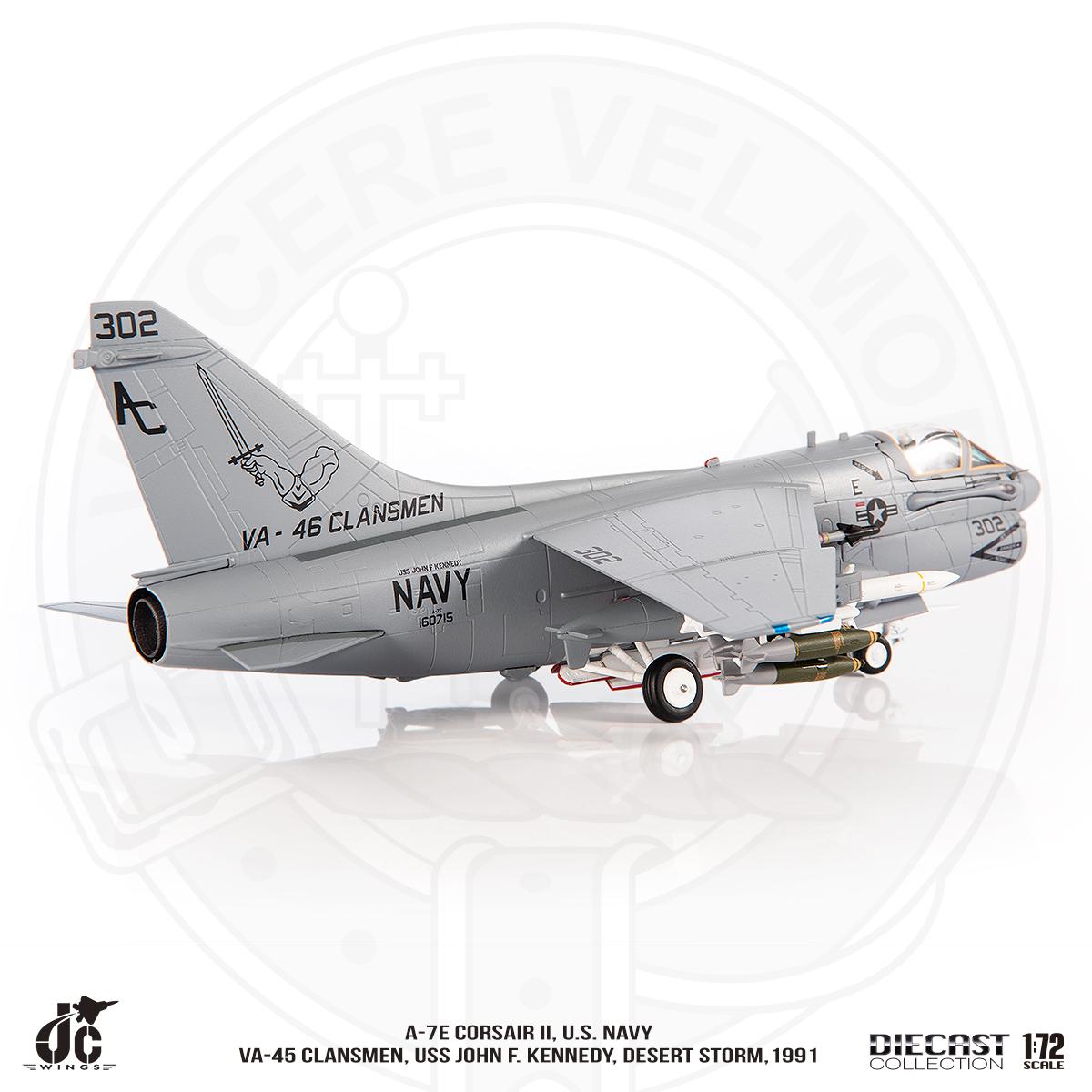
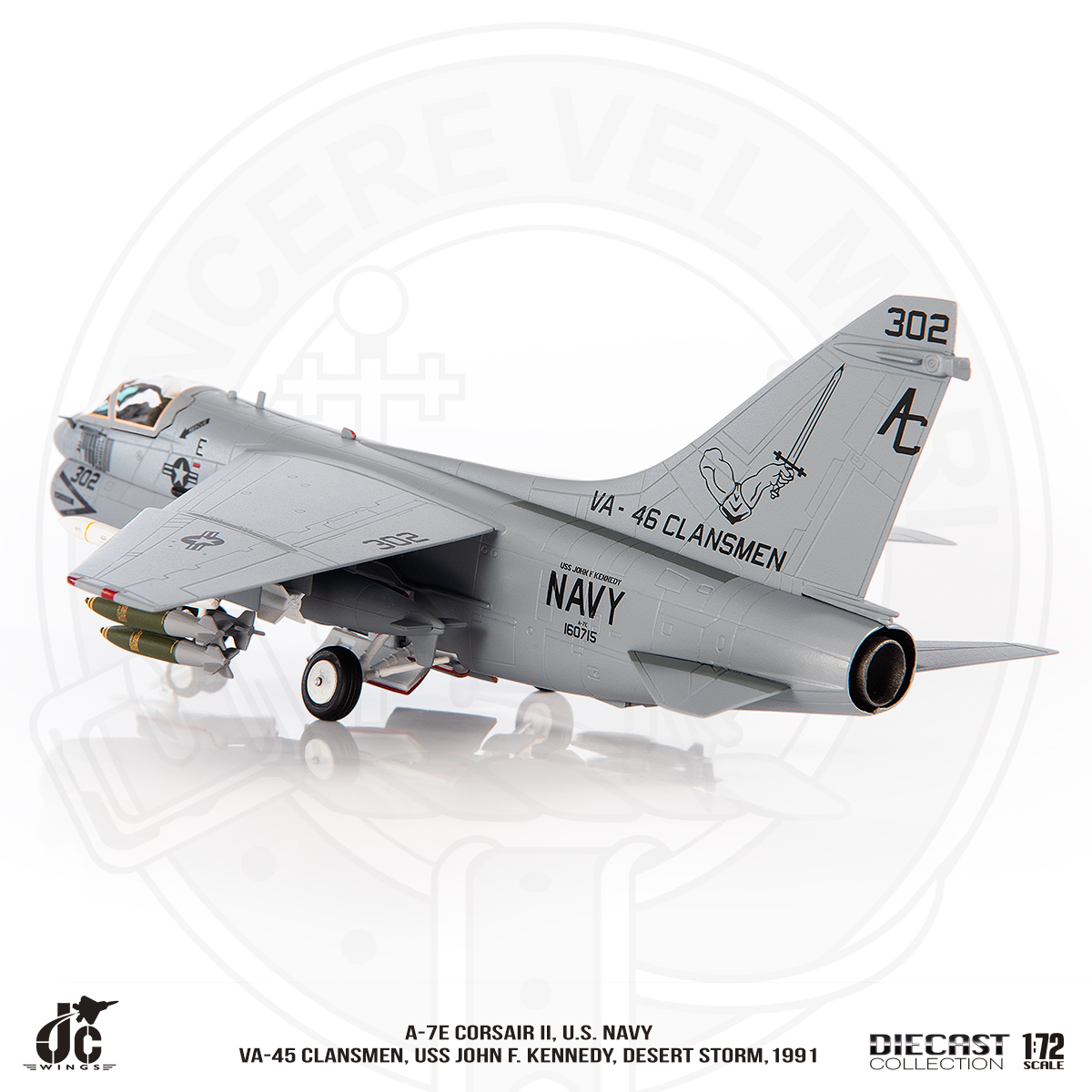
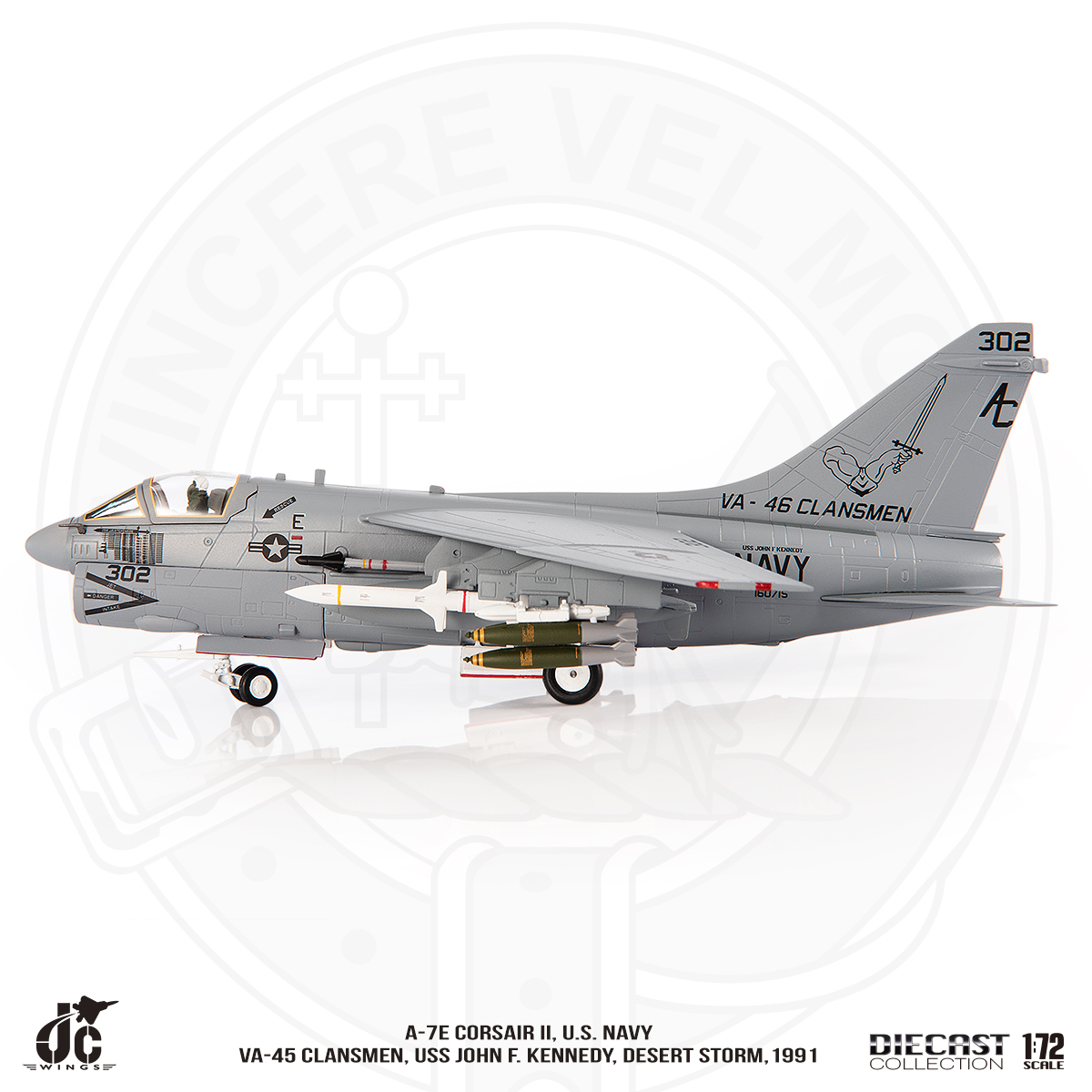
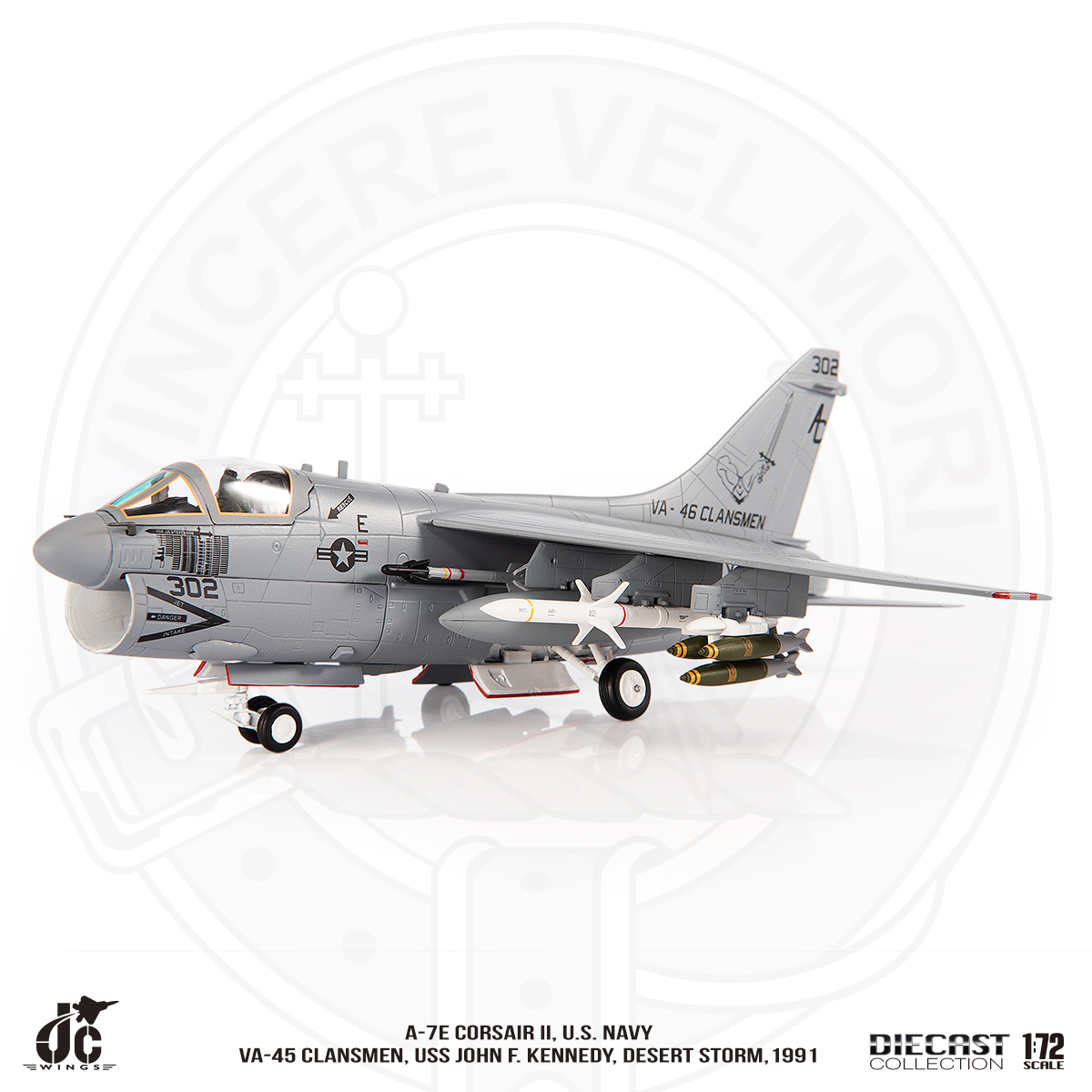
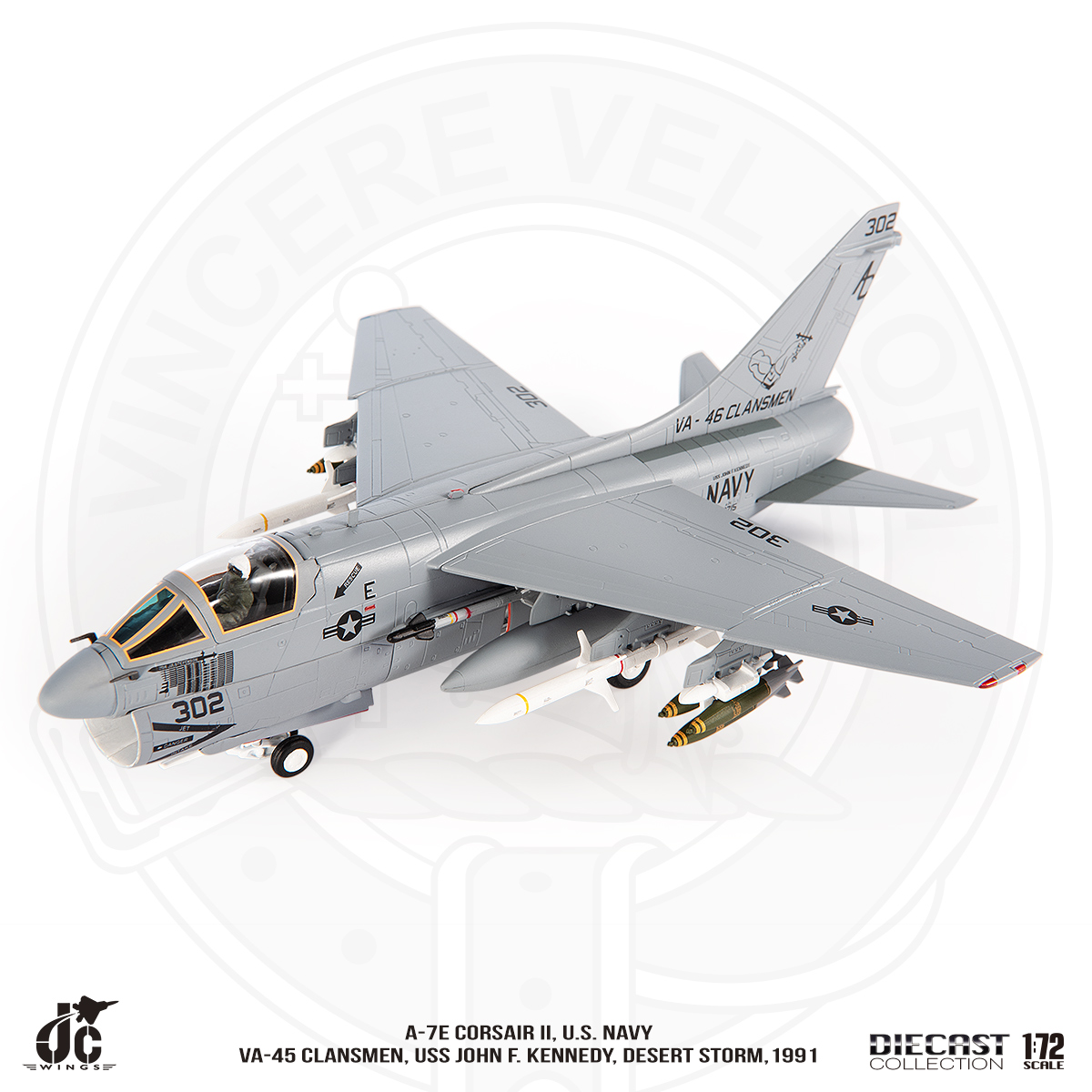
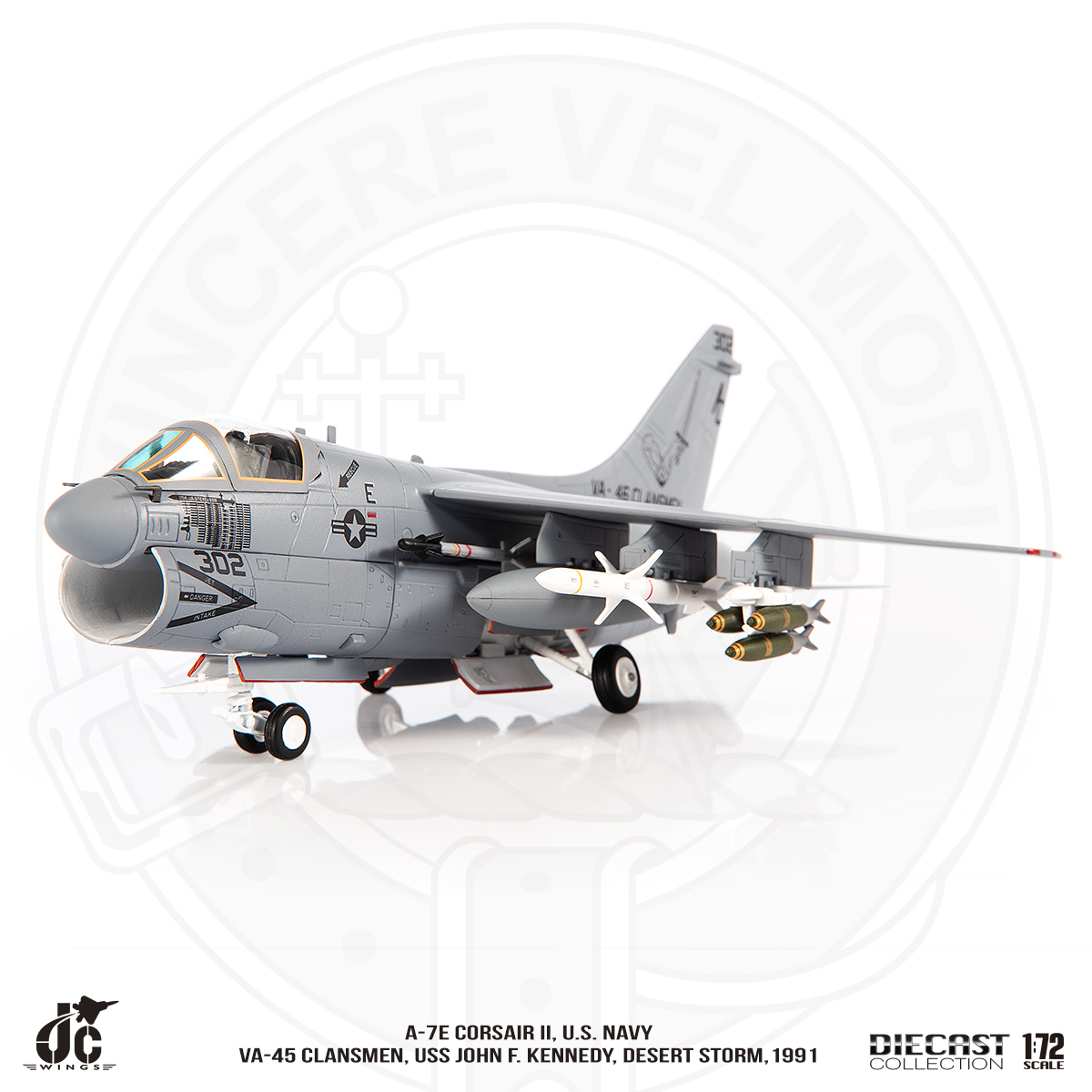
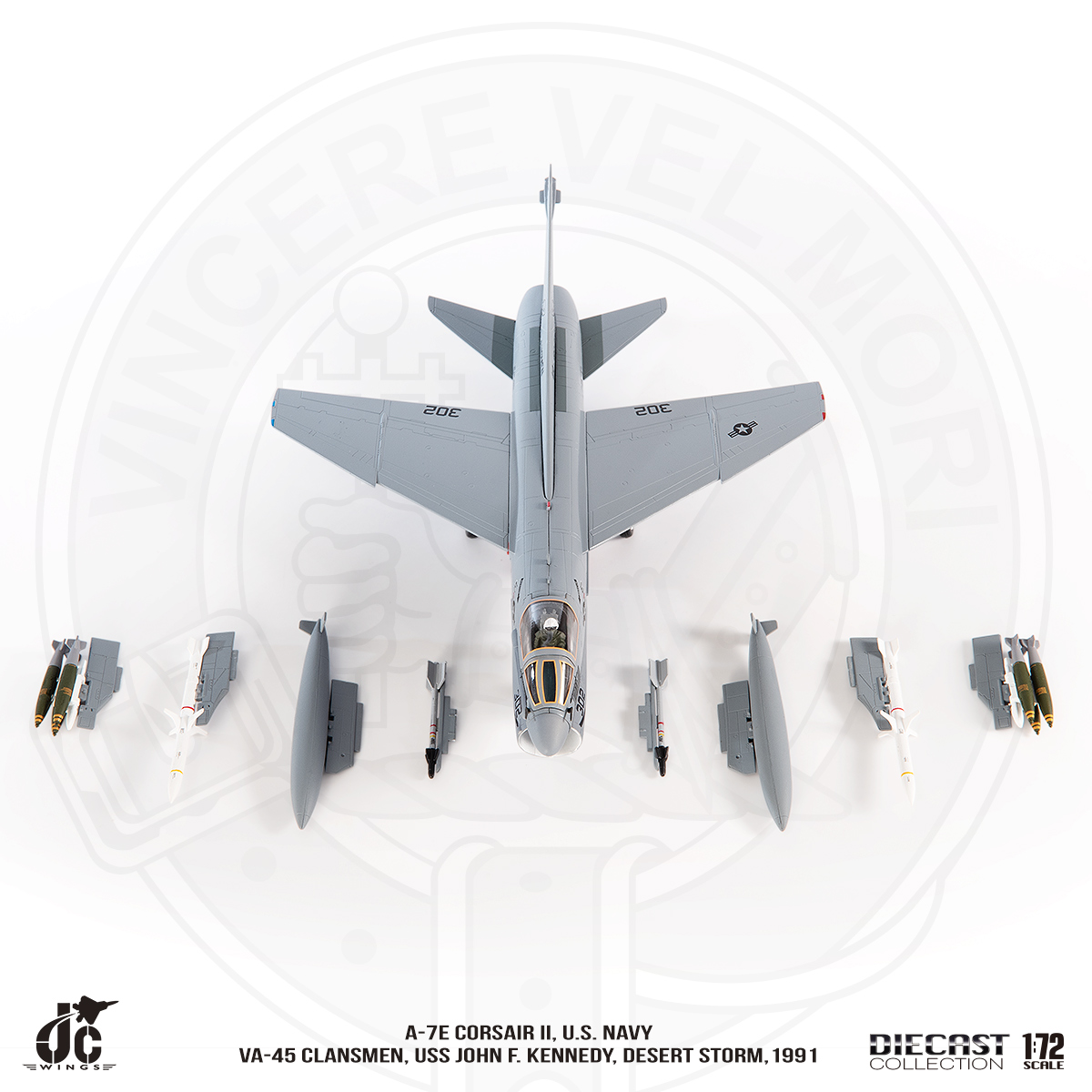
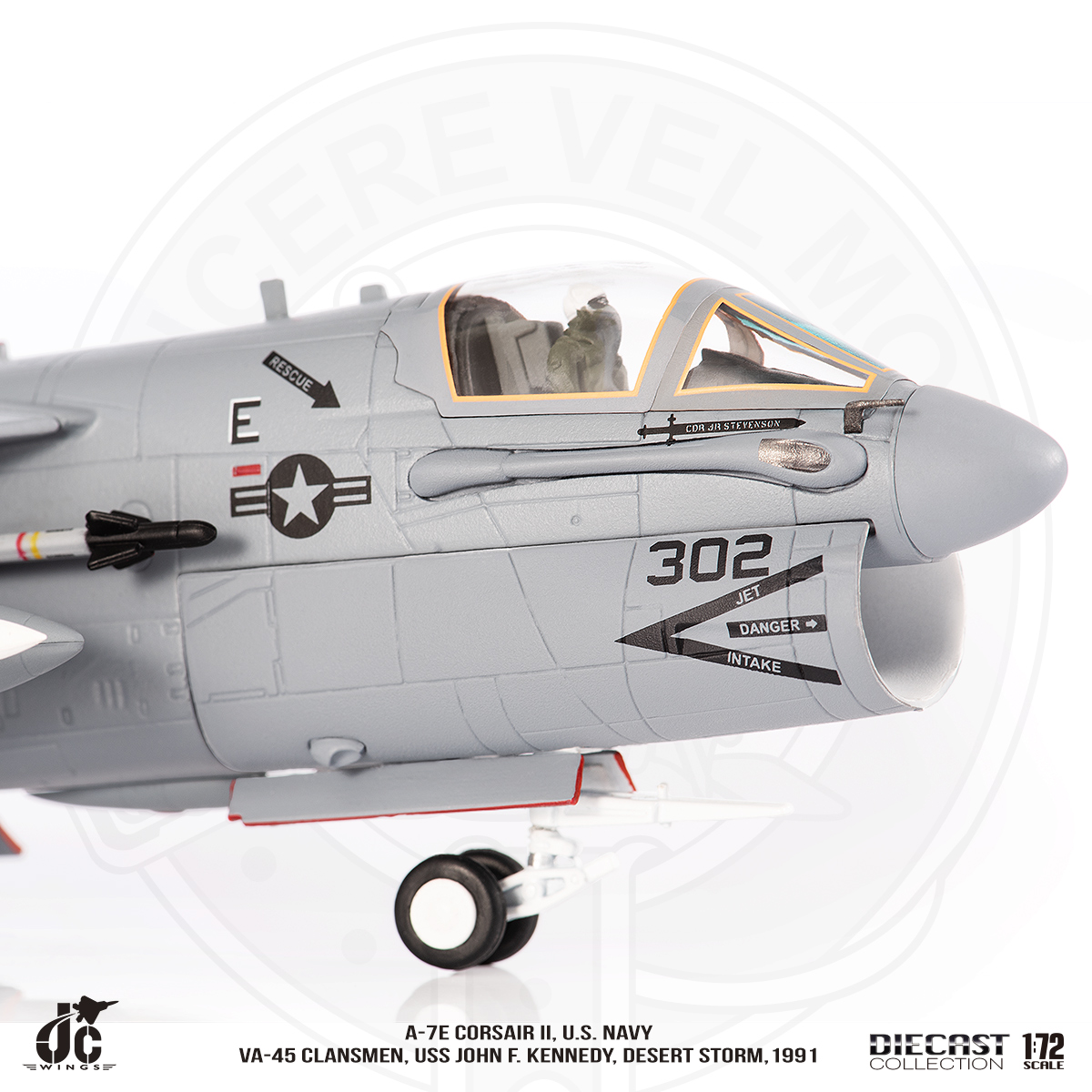
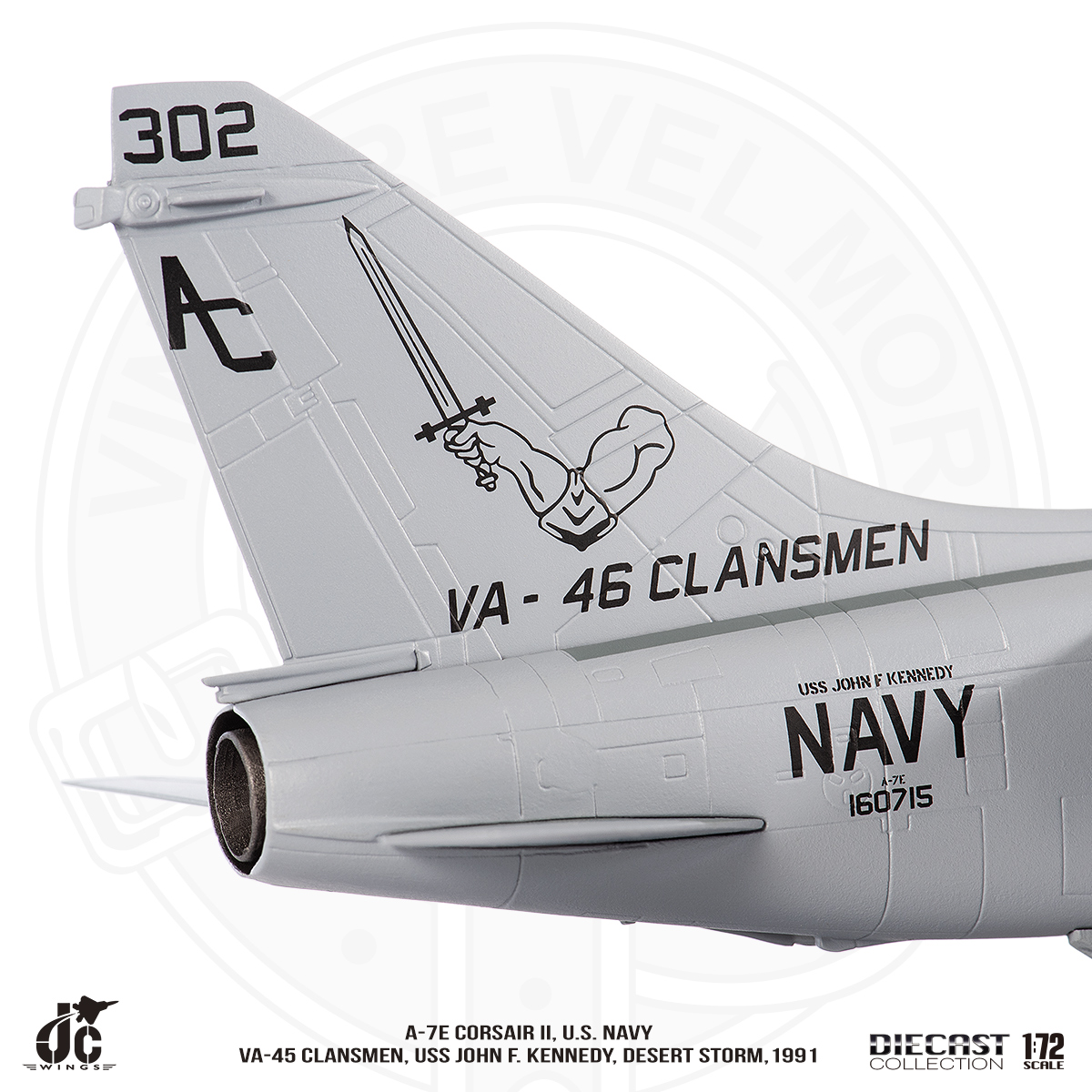
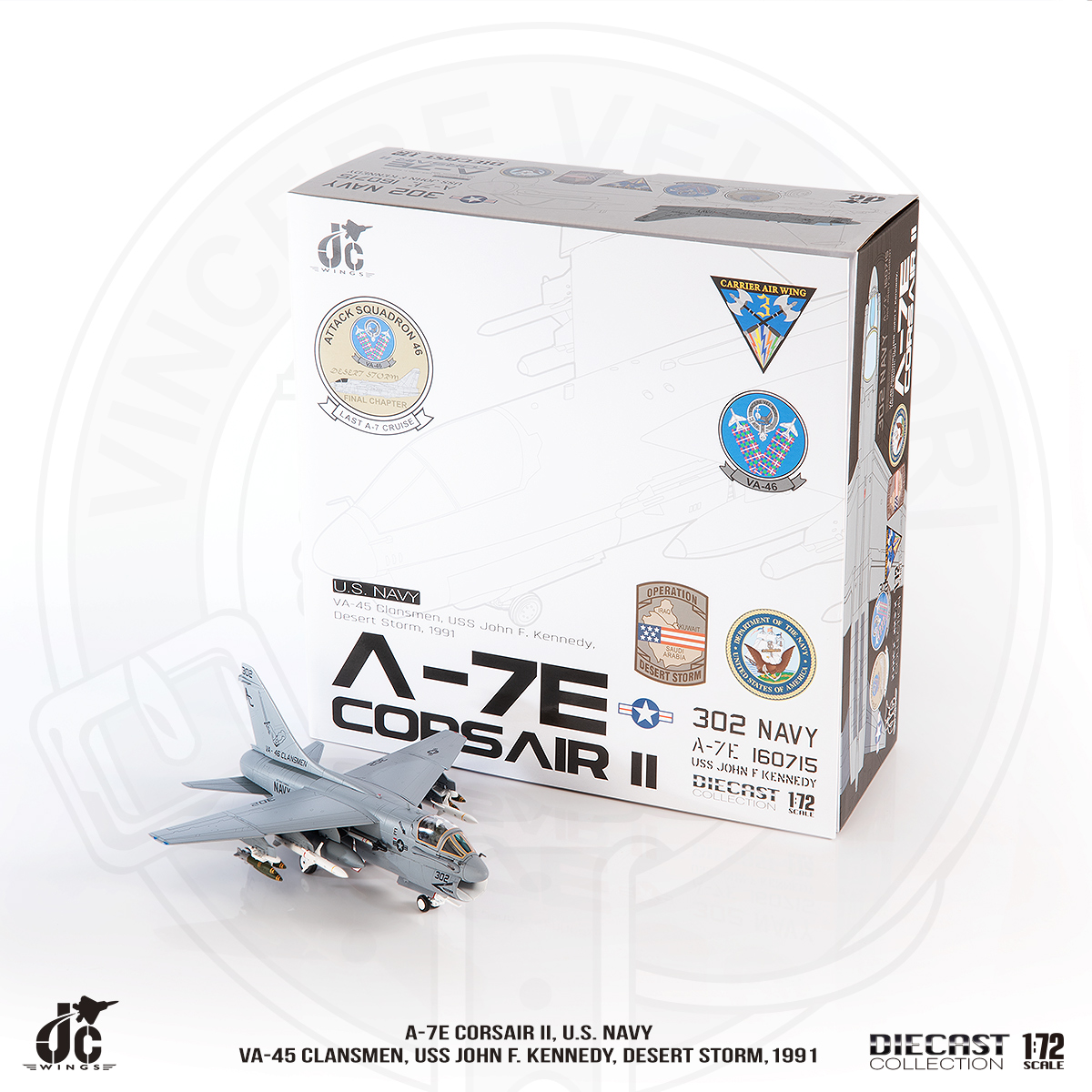
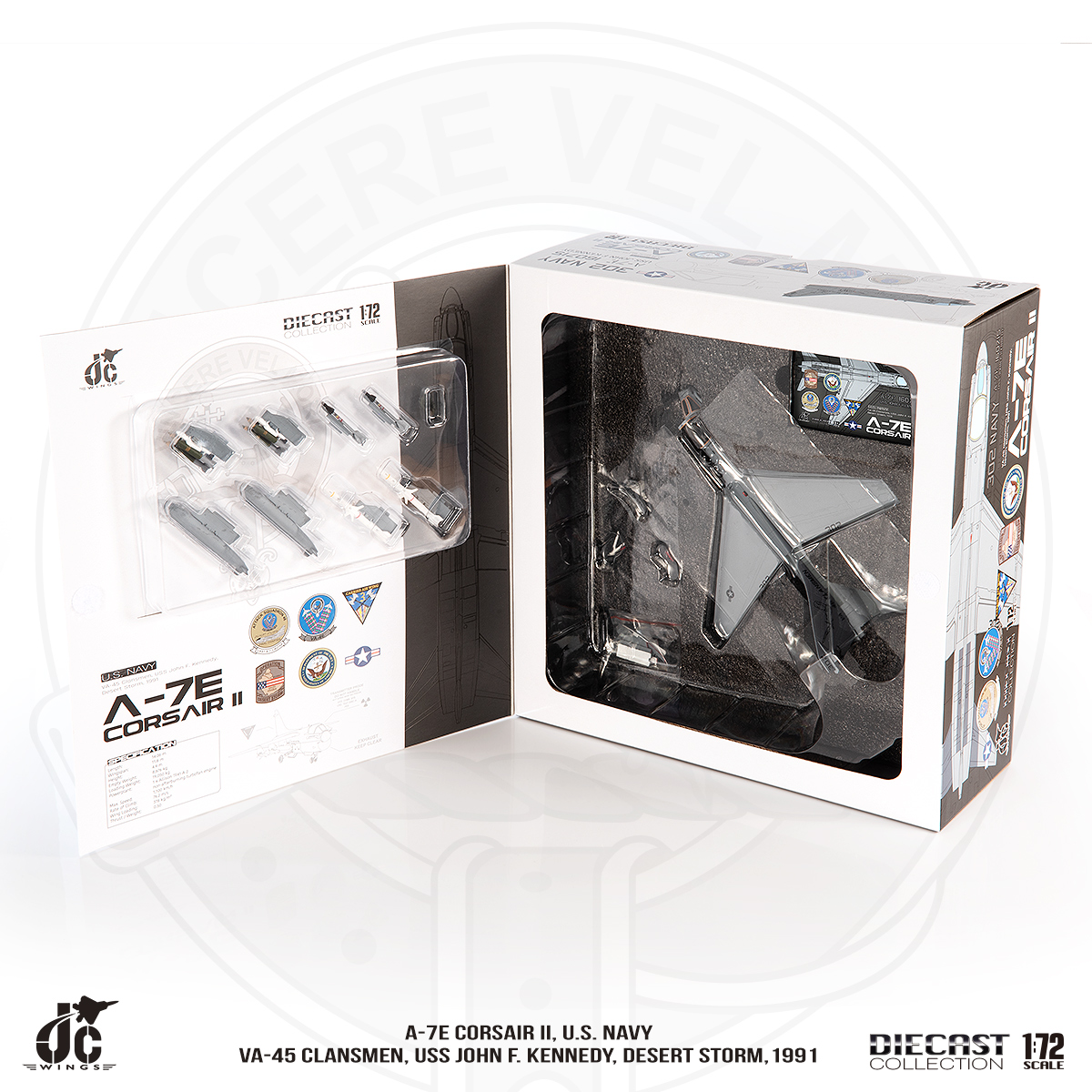
The LTV A-7 Corsair II is an American carrier-capable subsonic light attack aircraft designed and manufactured by Ling-Temco-Vought (LTV).
The A-7 was developed during the early 1960s as replacement for the Douglas A-4 Skyhawk. Its design was derived from the Vought F-8 Crusader; in comparison with the F-8, the A-7 is both smaller and restricted to subsonic speeds, its airframe being simpler and cheaper to produce. Following a competitive bid by Vought in response to the United States Navy's (USN) VAL (Heavier-than-air, Attack, Light) requirement, an initial contract for the type was issued on 8 February 1964.Development was ra pid, first flying on 26 September 1965 and entering squadron service with the USN on 1 February 1967; by the end of that year, A-7s were being deployed overseas for the Vietnam War.
Initially adopted by USN, the A-7 proved attractive to other services, soon being adopted by the United States Air Force (USAF)
and the Air National Guard (ANG) to replace their aging Douglas A-1 Skyraider and North American F-100 Super Sabre fleets.
Improved models of the A-7 would be developed, typically adopting more powerful engines and increasingly capable avionics.
American A-7s would be used in various major conflicts, including the Invasion of Grenada, Operation El Dorado Canyon, and the Gulf War. The type was also used to support the development of the Lockheed F-117 Nighthawk.
The A-7 was also exported to Greece in the 1970s and to Portugal in the late 1980s. The USAF and USN opted to retire their remaining examples of the type in 1991, followed by the ANG in 1993 and the Portuguese Air Force in 1999. The A-7 was largely replaced by newer generation fighters such as the General Dynamics F-16 Fighting Falcon and the McDonnell Douglas F/A-18 Hornet. The final operator, the Hellenic Air Force, withdrew the last A-7s during 2014.
While USAF A-7s stayed home in favor of A-10s, the USN deployed two of its last A-7E squadrons to Operation Desert Shield in August 1990 aboard USS John F. Kennedy, the only carrier of six deployed to Desert Storm to operate the A-7. The navy squadrons VA-46 and VA-72 made the last combat sorties of the A-7 in Operation Desert Storm flying from the Red Sea to targets throughout Iraq. The A-7 was used both day and night to attack a wide range of heavily defended deep interdiction targets in Iraq as well as "kill boxes" (geographically defined kill zones) in Kuwait, employing a variety of weapons including precision-guided munitions (PGMs), such as the TV-guided Walleye glide bomb, unguided general-purpose bombs, and High Speed Anti-Radiation missiles (HARM). The A-7 was also used as a tanker in numerous in-flight refueling missions.
Schaal:
1:72
Afmetingen: zie
deze pagina
Materiaal: voornamelijk metaal
Staander: niet meegeleverd
Merk: JC Wings

Nr: JCW-72-A7-009
Op voorraad:
toekomstige uitgave, datum uitgave onbekend
 Groenere optie!
In tegenstelling tot andere winkels vervoeren wij dit model vanaf de fabriek in China naar ons magazijn zonder gebruik te maken van luchtvracht. Wij houden net zoveel van vliegtuigen als jij, maar luchtvracht heeft wel een grote impact op het milieu. Luchtvracht is bovendien erg duur, door gebruik te maken van andere transportmiddelen kunnen we modellen voor een lagere prijs aanbieden.
Het enige voordeel van luchtvracht is dat het heel snel is. Maar dat vinden wij niet belangrijker dan alle nadelen. Als je een model vooraf reserveert weet je zeker dat je het bij ons kunt kopen. Tegen een lagere prijs, met minder impact op het milieu.
Toegevoegd aan website: 2026-08-05
Brochure / aankondiging:
augustus 2026